When you are sourcing metal for a project, you will find that stainless steel comes in several flat-rolled formats. It can be hard to decide whether to use a strip, a sheet or a coil because they all appear to be very similar. However, selecting the incorrect one might result in higher prices, lost material and manufacturing issues. Understanding these distinctions is critical to your fabrication efficiency, and the final performance of the components. While these items are produced through identical rolling procedures, they differ greatly in length, thickness, andhow they are delivered to your shop. In this blog, we’ll explore the specific stainless steel strip sizes, shapes, and most common applications for each type so you can make the best decision for your needs.
What Is Stainless Steel Strip
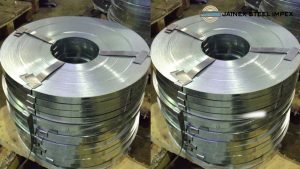
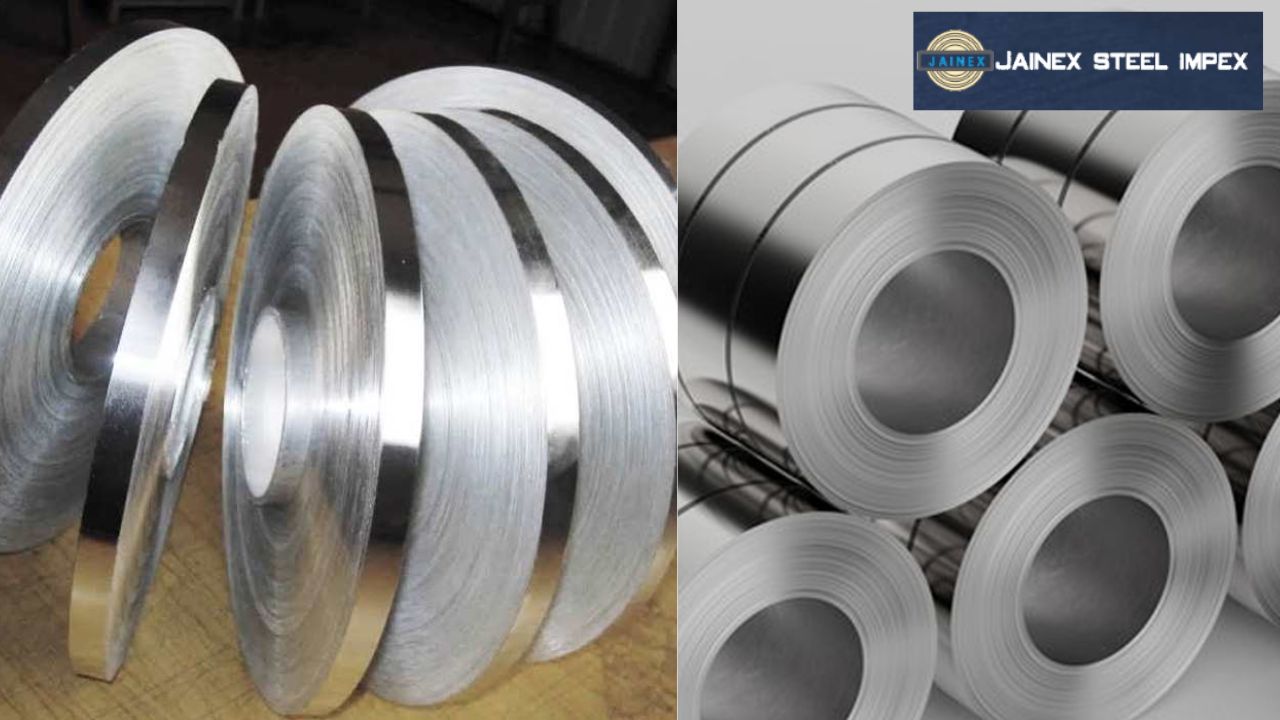
A stainless steel strip is a narrow version of flat-rolled metal that offers very precise thickness control. It is typically made by using wider coils, and slitting them down into much smaller widths. Manufacturers use this form when they need high-dimensional accuracy and a specific surface finish for delicate work. Because it is narrower than a standard sheet, it is easier to feed into small machines. Stainless steel strips are the go-to choice for precision applications where every millimeter counts. You will find them used in industries that require tight tolerances that wider sheets simply cannot provide consistently across their entire surface.
Key Characteristics of Stainless Steel Strip
The most defining feature of a strip is its narrow width, which usually stays under 24 inches. It boasts incredibly tight thickness tolerances, meaning the metal is uniform from one end to the other. You can expect a very smooth surface finish and great flexibility, making it easy to bend or shape without cracking. This consistency is what makes it perfect for detailed manufacturing. Because it comes in long lengths but narrow widths, it provides a level of accuracy that helps avoid jams in high-speed production tools.
Common Applications of Stainless Steel Strip
Because of its precision, this format is ideal for making springs, cutting tools, and various clamps. You will see it used often in the automotive and electronics industries for small, intricate parts. It is also the primary material for stainless steel shims, which are used for filling minor gaps or modifying the fit of mechanical components. Engineers prefer the strip form as it reduces scrap when manufacturing small pieces. It also enables continuous feeding into stamping machines, which speeds up the assembly process for brackets, and connectors.
What Is Stainless Steel Sheet
Stainless steel sheet is available in fixed rectangular measurements and is a flat product. For general fabrication, it is easier to handle and wider than a strip. Sheets are provided as separate plates but are cut from coils. The width and handling technique are the primary distinctions from a strip. During fabrication, sheets are designed to be cut, bent, and welded. They are often used in industrial facilities, workshops, and building sites. Sheets are available in conventional sizes, which makes layout and planning simpler. This design works well for environments in which tight width accuracy is not as important and wide flat surfaces are required.
Key Characteristics of Stainless Steel Sheet
Sheets come in a wide range of thicknesses, from very thin gauges to heavy plates. One of their best traits is flatness, which is essential for aesthetic projects like wall panels. They are available in various finishes, including brushed, mirrored, or matte. Sheets are very easy to work with if you are using manual tools for cutting, bending, or welding. Because they come in standard industry sizes, it is simple to calculate how many pieces you need for a specific job, helping you manage your inventory and budget.
Common Applications of Stainless Steel Sheet
You can find these sheets in architectural panels on the sides of buildings and in professional kitchen equipment like tables and sinks. They are also used to build industrial enclosures, large tanks, and automotive body parts. Any project that requires a large, flat area, like a backsplash or a sign, will likely use this form. It is the standard choice for general fabrication shops that take on custom projects where they need to cut unique shapes out of a larger piece of metal.
What Is Stainless Steel Coil
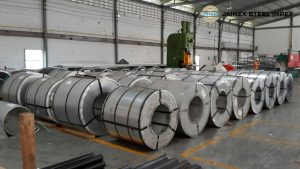
A stainless steel coil is a long, continuous length of metal that has been rolled up into a giant “donut” shape. This is the most basic kind of flat-rolled steel and is often the starting point for both sheets and strips. Coils are suitable for large-scale industrial processes as they can handle a continuous flow of material for hours without interruption. Instead of dealing with hundreds of individual sheets, an industry can put one huge coil into a machine, and operate a continuous production line.
Key Characteristics of Stainless Steel Coil
The primary benefit of a coil is its massive, continuous length, which can span thousands of feet. Coils provide significant flexibility, as they can be split or cut to any width, or length that the consumer requires. They are very compatible with automated processing techniques, such as roll forming and high-speed stamping. Using coils is also a particularly efficient technique to store a lot of metal in a compact area, as the roll’s vertical space saves floor space as compared to flat stacks.
Common Applications of Stainless Steel Coil
Coils are the base of tube and pipe manufacturing, where the metal is unrolled and welded into a cylinder. They are also used in large-scale stamping and roll-forming processes to produce products such as gutters, roofing, and vehicle parts. Coils are used to maintain large manufacturing plants functioning, which create thousands of similar goods each day. It is also the form used by service centers that slit the metal down to create smaller strips or cut it into specific sheet lengths for customers.
Stainless Steel Strip vs. Sheet vs. Coil: Key Differences
To help you decide, here is a quick look at how these three forms compare in the real world.
Differences in Width, Thickness, and Supply Form
- Stainless Steel Strip: Very narrow widths; extremely tight thickness tolerances; supplied in small rolls.
- Stainless Steel Sheet: Wide, fixed rectangular dimensions; standard thickness tolerances; supplied in flat stacks.
- Stainless Steel Coil: Very wide and very long; standard to precise tolerances; supplied in large, heavy rolls.
Differences in Fabrication and Processing
- Stainless Steel Strip: Best for high-speed precision stamping and small parts.
- Stainless Steel Sheet: Best for manual fabrication, welding, and one-off custom projects.
- Stainless Steel Coil: Best for automated, continuous production lines and large-volume manufacturing.
Differences in Cost and Material Efficiency
- Stainless Steel Strip: Higher cost per pound due to extra processing, but very low waste for small parts.
- Stainless Steel Sheet: Moderate cost; waste depends on how well the parts fit the rectangular shape.
- Stainless Steel Coil: Lowest cost per pound for bulk buyers; minimises waste by allowing custom lengths.
How to Choose Between Stainless Steel Strip, Sheet, and Coil
Choosing the right form depends on the scale of your work and the tools you have. If you are making small, high-precision parts like springs or washers, the strip is usually the best bet. For building a large tank or a kitchen counter, you should go with sheets. If you are running a factory that makes thousands of parts a day, buying coils will save you the most money and time.
Based on Application and Tolerance Requirements
If your project needs a perfect fit and a specific finish, the strip provides the best control. Sheets are better for visual surfaces where flatness is the main goal. Always check the tolerance requirements of your blueprints before ordering, as a strip can often meet tighter specs than a standard sheet.
Based on Production Volume and Manufacturing Method
Small shops usually prefer sheets because they are easier to handle with hand tools. High-volume manufacturers need the efficiency of a coil to keep labour costs down. If you are somewhere in the middle, you might buy a coil and have a service centre slit it into custom strips for your specific machines.
Based on Storage, Handling, and Logistics
Think about your equipment. Do you have a forklift that can lift a 10,000-pound coil? If not, sheets are much easier to manage. Coils require specialised unrolling stands, while sheets just need a flat table. Consider your storage space as well; sheets take up a lot of floor area, while coils can be heavy and require reinforced flooring.
Conclusion
Understanding the difference between a stainless steel strip, sheet, and coil is the first step toward a successful project. Strips offer the precision needed for small, detailed parts. Sheets provide the large, flat surface area required for construction and general fabrication. Coils offer the best efficiency for high-volume industrial work. By matching the right material form to your specific machinery and production goals, you can lower your costs, reduce waste, and ensure your final product is of the highest quality.