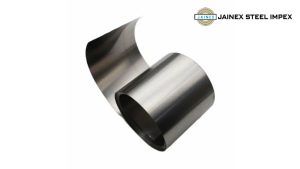
When it comes to stainless steel, SUS304 and SS304 are two of the most commonly referenced grades. Both are widely used in various industries, from construction to kitchenware. Although they share many similarities, understanding the key differences between SUS304 and SS304 is crucial for making informed decisions about material selection. This blog will explore these differences and supply insights into choosing the right grade for your needs.
What is Stainless Steel 304?
Stainless Steel 304, often referred to simply as SS304, is a versatile and widely used austenitic stainless steel. It comprises 18% chromium and 8% nickel, making it highly resistant to corrosion and oxidation. SS304 is known for its excellent formability and weldability, making it suitable for various applications, including automotive parts, kitchen appliances, and industrial equipment.
What is SUS304?
SUS304 is a Japanese standard stainless steel, equivalent to SS304, in terms of composition and properties. The “SUS” in SUS304 stands for “Steel Use Stainless,” a designation used by the Japanese Industrial Standards (JIS). Like SS304, SUS304 contains 18% chromium and 8% nickel, offering similar corrosion resistance, formability, and weldability.
Key Differences Between SUS304 and SS304
|
Comparison Factor |
SUS304 |
SS304 |
|
Designation System |
SUS304 is the Japanese designation used under JIS standards for 304 austenitic stainless steel. |
SS304 is a commonly used commercial designation for Type 304 stainless steel; the applicable specification depends on the product form and governing standard. |
|
Applicable Standards |
Commonly specified according to relevant JIS stainless steel standards. |
Commonly specified to ASTM/ASME or other applicable standards depending on the product, such as ASTM A240 for stainless steel plate, sheet and strip. |
|
Material Type |
Austenitic chromium-nickel stainless steel, generally corresponding to the 304 family. |
Austenitic chromium-nickel stainless steel belonging to the 304 family. |
|
Chemical Composition |
Based on the requirements of the applicable JIS specification. |
Based on the requirements of the applicable specification. For example, ASTM specifications establish defined chemical and mechanical requirements for Type 304 products. |
|
Chromium & Nickel |
Typically associated with the approximately 18% chromium and 8% nickel composition of 304 stainless steel, subject to the applicable standard. |
Similarly associated with approximately 18% chromium and 8% nickel, but exact limits depend on the applicable product standard. |
|
Mechanical Properties |
Mechanical requirements depend on the specific JIS product standard, product form and condition. |
Mechanical requirements depend on the applicable ASTM/ASME or other product specification. |
|
Corrosion Resistance |
Provides the corrosion resistance generally associated with 304 stainless steel when supplied and used within the applicable specification and environment. |
Provides comparable corrosion resistance when the material meets the relevant Type 304 specification. |
|
Interchangeability |
Often corresponds closely to other 304 designations, but equivalence should be confirmed against the applicable standards and material certificate. |
Should not be treated as automatically interchangeable with SUS304 solely because both are referred to as 304 stainless steel. |
|
Typical Selection Basis |
Appropriate where the project requires compliance with Japanese/JIS material specifications. |
Appropriate where the project requires ASTM, ASME or another specified material standard. |
Important: Avoid stating that SUS304 and SS304 are always identical. The material designation alone is not sufficient to establish exact equivalence because chemical, mechanical, dimensional and testing requirements can vary by product standard and form. ASTM A240, for example, specifies chemical and mechanical requirements for covered stainless steel products.
Standardization and Nomenclature:
SUS304: Adheres to the Japanese Industrial Standards (JIS). The naming convention is primarily used in Japan and other Asian countries.
SS304: Follows the American Society for Testing and Materials (ASTM) standards. The SS304 designation is commonly used in the United States and Europe.
Chemical Composition:
The chemical composition of SUS304 and SS304 is nearly identical, with grades containing 18% chromium and 8% nickel. However, minor differences in trace elements may exist due to different manufacturing standards and tolerances.
Mechanical Properties:
SUS304 and SS304 offer similar mechanical properties, including tensile strength, yield strength, and hardness. Any variations are usually minimal and depend on the specific manufacturing process rather than the material grade.
Corrosion Resistance:
Since both grades have the same chromium and nickel content, they offer comparable resistance to corrosion and oxidation. However, the exact performance in corrosive environments can vary slightly depending on the detailed application and environmental factors.
Availability and Cost:
SUS304: More readily available in Asian markets and often used in products manufactured in Japan and neighboring countries.
SS304: More common in the United States and Europe, leading to easier availability in these regions. Price differences are generally minimal, though regional factors can influence cost.
Material Selection: SUS304 vs SS304
|
Selection Factor |
What to Consider |
|
Project Standard |
Select the designation and specification required by the project documentation. If the project calls for a JIS specification, SUS304 may be specified; if it calls for ASTM/ASME requirements, the corresponding Type 304 specification should be confirmed. |
|
Product Form |
Check the standard applicable to the actual product, such as plate, sheet, strip, pipe, tube, bar or another form. Requirements can differ between product standards. |
|
Chemical Requirements |
Compare the actual chemical composition limits stated in the relevant standards rather than assuming that all 304 designations have identical limits. |
|
Mechanical Requirements |
Verify tensile strength, yield strength, elongation, hardness and other required properties against the applicable material specification. |
|
Corrosion Environment |
Consider chloride exposure, chemicals, temperature, moisture and other service conditions. The choice should be based on the actual environment rather than simply choosing between the names SUS304 and SS304. |
|
Material Certification |
Review the mill test certificate or material certificate to confirm the supplied grade, specification, chemical composition and mechanical properties. |
|
Sourcing Requirements |
If a project specifies JIS, ASTM, ASME or another standard, source material that meets the stated specification rather than selecting solely by the generic term “304 stainless steel.” |
|
Application Requirements |
For general applications, 304 stainless steel is widely used, but applications involving severe corrosion, elevated temperatures or other demanding conditions may require evaluation of a different grade or alloy. |
SUS304 and SS304 both refer to the 304 family of austenitic stainless steels, but the designations should not be treated as automatically identical in every application. The correct selection depends on the applicable material standard, product form, chemical and mechanical requirements, service environment and project specifications. Always verify the required specification and material certificate before treating one designation as an equivalent substitute for another.
When choosing between SUS304 and SS304, the decision largely depends on your location, industry standards, and specific application requirements.
- Regional Considerations: If you are sourcing materials or manufacturing in Asia, SUS304 might be more accessible and cost-effective. Conversely, SS304 could be the better choice in the United States or Europe.
- Industry Standards: Choosing the corresponding stainless steel grade is essential for projects that must adhere to specific standards (e.g., JIS vs. ASTM). For example, if a project requires compliance with Japanese standards, SUS304 is the appropriate choice.
- Application Environment: Both grades are suitable for most general-purpose applications. However, for highly specialized or extreme environments (e.g., highly corrosive or high-temperature conditions), consulting with a materials engineer to select the most appropriate grade or alloy may be necessary.
Our SS 304 Product
SUS304 vs SS304: Which is Better?
SUS304 and SS304 are fundamentally similar, with their differences primarily rooted in regional standards and availability. Understanding these nuances helps ensure that you select the right material for your specific needs. Whether you choose SUS304 or SS304, both grades offer reliable performance, excellent corrosion resistance, and versatility, creating ideal choices for a wide range of applications.
By considering factors such as location, industry standards, and the specific conditions of your application, you can confidently select the stainless steel grade that best meets your needs.
FAQs
Is SUS304 the same as SS304?
SUS304 and SS304 generally refer to comparable 304 austenitic stainless steel grades. The main distinction is the standard and designation system used, particularly JIS for SUS304.
What is the difference between SUS304 and SS304?
The primary difference is their designation and applicable standards. SUS304 is identified under Japanese Industrial Standards, while SS304 is commonly referenced through U.S. and other international specifications.
SUS304 vs SS304: Which is better?
Neither is universally better. Selection should depend on the required standard, project specifications, sourcing region, chemical requirements, and mechanical properties specified for the application.
Does SUS304 have the same corrosion resistance as SS304?
They generally provide comparable corrosion resistance because both represent 304 stainless steel. Actual performance depends on the environment, fabrication, surface condition, and exact specification.
Can SUS304 and SS304 be used interchangeably?
They may be comparable in many applications, but they should not be treated as automatically interchangeable. Check the applicable JIS, ASTM, or project specification before substituting one designation for another.