A single battery pack in an electric vehicle can contain hundreds of metal connectors, and the metal choice behind those connectors often decides how long the pack lasts. The automotive and EV sector keeps growing, and manufacturers face constant pressure on corrosion, heat, weight, and electrical reliability. Stainless steel strips answer most of these demands at once, which is why they show up across battery systems, exhaust lines, sensors, and structural assemblies. This guide looks at why SS strips remain a core material choice, and where a reliable stainless steel strip manufacturer fits into the picture for its applications across EV battery components and other automotive metal materials.
What Are Stainless Steel Strips?
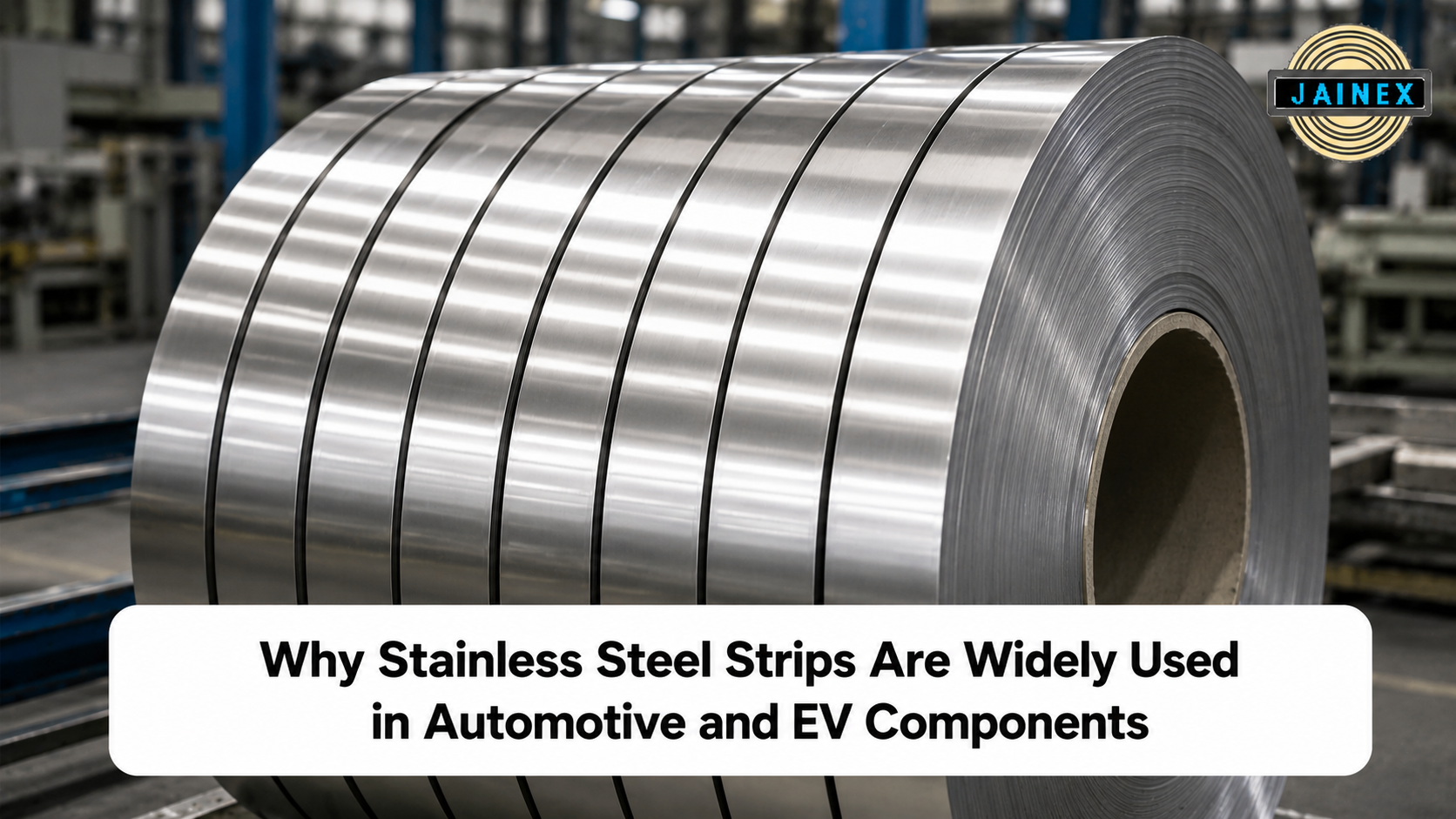
SS strips are thin, flat-rolled stainless steel products supplied in narrow widths for precision industrial work. Manufacturers roll them to tight thickness tolerances, often well under 1mm, so they fit directly into stamping, forming, and welding lines without secondary machining. Grades like SS 304, SS 316 and SS 430 dominate automotive use, alongside high-strength variants for structural parts.
Strength-to-weight ratio matters first. A strip that holds its shape under load while weighing less than an equivalent steel sheet helps EV makers chase range targets. Corrosion resistance comes next, since road salt and moisture attack exposed metal daily. Heat tolerance and formability round out the list, letting the same coil feed into both a battery tab and an exhaust clamp.
Key Properties of Stainless Steel Strips for Automotive and EV Applications
Six properties explain most of the demand from automotive engineers, and each one solves a specific problem on the production line or in the field.
- Excellent corrosion resistance protects components from moisture, road salt, and constant environmental exposure during years of service on public roads.
- High strength and durability for reliable performance of parts under constant vibration, mechanical stress and repeated thermal cycling in moving vehicles.
- Lightweight yet strong strips support vehicle weight reduction goals, directly improving EV range and fuel efficiency without sacrificing structural integrity.
- Heat and temperature resistance make these strips suitable for exhaust systems, battery thermal management, and other high-temperature automotive zones.
- Precision formability allows manufacturers to stamp, bend, and weld complex automotive components without cracking or excess material waste.
- Sustainability and recyclability support eco-friendly EV manufacturing goals, since stainless steel scrap re-enters the production cycle without losing core material properties.
Why Stainless Steel Strips Are Widely Used in Automotive and EV Components
Six application areas show why these strips earn a place on the vehicle, each adapted to a specific demand. EV battery components need strips for enclosures, tabs, connectors and thermal management parts that require to have precise dimensions. Exhaust systems use heat-resistant strip grades that keep their shape under steady high-temperature gas flow. Engine bays are often damp, and strips are used for reliable conductivity in electrical connectors and sensors.
Offers lightweight strength when the vehicle safety standards demand it. Formed strip sections are used for structure reinforcement. They move fuels and fluids in corrosion-resistant strips to avoid contamination and leakage. Polished strips are used on interior decorative components to provide a high-quality finish that can withstand the daily wear and tear.
Benefits of Using Stainless Steel Strips in EV and Automotive Manufacturing
These benefits explain why manufacturers keep choosing stainless steel strips over alternative materials for critical EV and automotive applications.
- Strips withstand vibration and thermal cycling, which extends component life across the vehicle’s full service period.
- Corrosion and heat resistance reduce failure rates in exhaust, battery, and underbody parts exposed to harsh conditions.
- Lower failure rates translate directly into fewer warranty claims and reduced maintenance costs over time.
- Lightweight strip construction improves fuel efficiency in combustion vehicles and extends range in electric vehicles.
- Manufacturing flexibility lets one strip grade serve multiple part designs across a single production line.
Common Stainless Steel Grades Used in Automotive and EV Components
Four grade families cover most automotive strip requirements, and picking the right one depends on the part’s exposure conditions and load demands.
- SS 304 strips serve general automotive applications, offering moderate corrosion resistance and good formability to meet most structural and trim needs at a reasonable cost.
- SS 316 strips deliver better corrosion resistance in demanding environments, particularly where exposure to road salt, chemicals, or coastal humidity exceeds what the 304 grade can reliably withstand.
- Ferritic stainless steel strips offer cost-effective heat-resistant performance for exhaust and underbody parts, where magnetic properties and lower nickel content keep material costs down.
- High-strength stainless steel strips go into safety-critical automotive structures such as crash-resistant frame sections, where yield strength matters more than raw corrosion tolerance.
How to Choose the Right Stainless Steel Strip for Automotive Applications
The first step in determining the right grade of strip is to understand how the part will perform. Parts that need to carry structural loads require stronger grades than parts that just need to maintain shape under light vibration. This quickly narrows down the selection of viable options. Next is corrosion and heat exposure, because a battery enclosure and an exhaust clamp are in totally different environments, even though both are stainless steel parts.
Thickness and dimensional tolerances then determine whether a strip fits existing tooling without modification. The formability and fabrication requirements are equally important, especially for parts that undergo multiple bending or stamping operations before final assembly. Compliance with automotive quality standards connects everything into place, because a part that meets every mechanical specification but fails certification testing never makes it onto a production vehicle.
How to Choose the Right Stainless Steel Strip Manufacturer
Material certifications and quality testing are the most important factors in evaluating a supplier. Automotive programs require traceable mill certificates and consistent batch testing. Manufacturers must offer a reliable availability of custom strip sizes and grades, especially for programs requiring non-standard widths or thicknesses for specific tooling.
The ability to precision roll and finish determines if the supplier can hold tight tolerances across large coil runs without rejects. Bulk supply and delivery reliability affects production schedules directly; a late coil shipment can shut down an entire stamping line. Rounding out the list is technical expertise in automotive materials. A supplier who understands grade selection for specific applications saves engineering time on every new part.
Quick Strip Selection Checklist
- Confirm grade matches corrosion and heat exposure
- Verify thickness tolerance against tooling specs
- Check formability for required bend radii
- Confirm mill certificates and test reports are available
- Confirm delivery lead times against the production schedule
Conclusion
Auto and EV manufacturing depends on stainless steel strips for corrosion resistance, strength and light weight, precision formability and a long service life in demanding conditions. These properties keep cropping up in places where reliability cannot be compromised, from battery enclosures to exhaust components and electrical connectors. Jainex Steel Impex is a stockist & supplier of stainless steel & nickel alloy strips, sheets & coils for industrial applications. Contact a reputable stainless steel strip manufacturer to verify grade availability and lead times for your next automotive program.