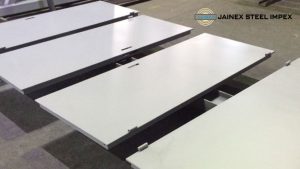
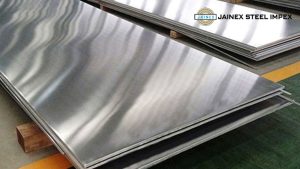
Picking the wrong sheet material for a high-temperature or corrosive application shortens equipment life and drives up replacement costs. Projects involving oxidation, carburization, and corrosive atmospheres need a material evaluated against actual service conditions, not chosen by reputation alone. Inconel 601 is a nickel-chromium alloy developed for applications requiring high-temperature oxidation resistance and corrosion resistance. Selecting the right sheet means working through operating temperature, corrosion exposure, mechanical requirements, thickness, dimensions, fabrication needs, surface condition, and applicable standards.
What Is an Inconel 601 Sheet?
Inconel Alloy 601, designated UNS N06601, combines nickel and chromium in a composition built around oxidation resistance at high temperatures. Corrosion Resistant Alloy 601 Sheets rely on that chromium content to form a stable oxide layer. The chromium content promotes the formation of a protective oxide layer that helps limit oxidation during high-temperature exposure. The alloy holds mechanical strength well above the temperatures where standard stainless grades degrade, and it resists oxidation and carburization in industrial atmospheres. Sheets are available across a range of thicknesses and dimensions for furnace components and thermal processing fabrications.
Key Properties of Inconel 601 Sheets
Inconel 601 Sheets offer excellent resistance to high temperatures. They retain their structure and strength where typical materials may soften.
- Oxidation and carburisation resistance: The chromium-rich composition protects surfaces against extended exposure to hot reactive conditions.
- Corrosion resistance: Besides basic high-heat applications, protection is provided in many industrial applications.
- Mechanical Strength & Stability: Good weldability and dimensional stability in shop fabrication.
- Specification verification: Requires that certain measurements of performance be verified against the technical standards applicable to it and not assumed.
Factors to Consider When Choosing the Right Inconel 601 Sheet
Operating Temperature: Continuous and maximum expected temperatures both need defining upfront, along with whether the application involves cycling, thermal shock, or sustained exposure over long duty cycles.
Operating Environment: Oxidizing atmospheres, chemical or combustion gases, carburizing conditions, chloride exposure, and furnace conditions each call for a different level of scrutiny during selection.
Mechanical Requirements: Tensile strength, yield strength, hardness, and structural loads all factor in, alongside vibration, thermal expansion, and fatigue considerations specific to the application.
Sheet Thickness: Thickness should match structural requirements, loading conditions, fabrication methods, heat-transfer needs, and the project specification not be selected by default.
Sheet Dimensions: Length, width, thickness tolerance, flatness, and custom-size availability all need confirming against the fabrication plan before ordering.
Surface Finish and Condition Hot-rolled or cold-rolled condition, annealed condition, and pickled or descaled surfaces each suit different downstream fabrication and cleanliness needs.
Fabrication Requirements: Whether the sheet needs cutting, bending, forming, machining, drilling, or welding should be settled before ordering, since method can influence which condition or finish to specify.
Standards and Certifications: ASTM/ASME specifications, the UNS N06601 designation, heat number, Material Test Certificate, chemical composition, mechanical test results, dimensional inspection, and full traceability all belong on the pre-order checklist.
Common Industrial Applications of Inconel 601 Sheets
Inconel 601 sheets are engineered to endure extreme thermal environments, providing critical oxidation resistance and structural stability across multiple heavy industries.
- Industrial furnaces: This alloy is used in equipment that is constantly exposed to high temperatures with no scaling or deterioration.
- Thermal processing: Parts withstand carburising atmospheres and severe combustion requirements that would destroy conventional metals.
- Petrochemical processing: The alloy’s superior corrosion resistance is used in systems in high-temperature chemical environments.
- Heat exchangers: This material can provide dimensional stability to sustain sealing surfaces under severe thermal cycling
- Power generation: Commonly used in infrastructure to safely manage high-temperature industrial gases and pollution control needs.
When Should You Choose Inconel 601 Sheets?
Inconel 601 is a good choice for daily service in high temperatures, severe oxidation exposure, thermal processing conditions or carburising atmospheres. The alloy is also recommended for corrosive environments subjected to repeated temperature exposure, especially in applications where dependable performance under severe conditions is essential. If the working environment does not require the properties of a nickel-based alloy then a less specialised and cheaper material may be just as suited.
Conclusion
Choosing the right Inconel 601 sheet comes down to evaluating the complete service environment, not selecting the alloy purely for its reputation for heat or corrosion resistance. Temperature range, atmosphere, corrosion exposure, mechanical loads, thickness, dimensions, surface condition, fabrication requirements, and applicable standards all need checking against the specific project before a sheet is ordered.