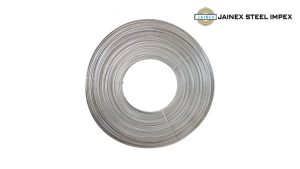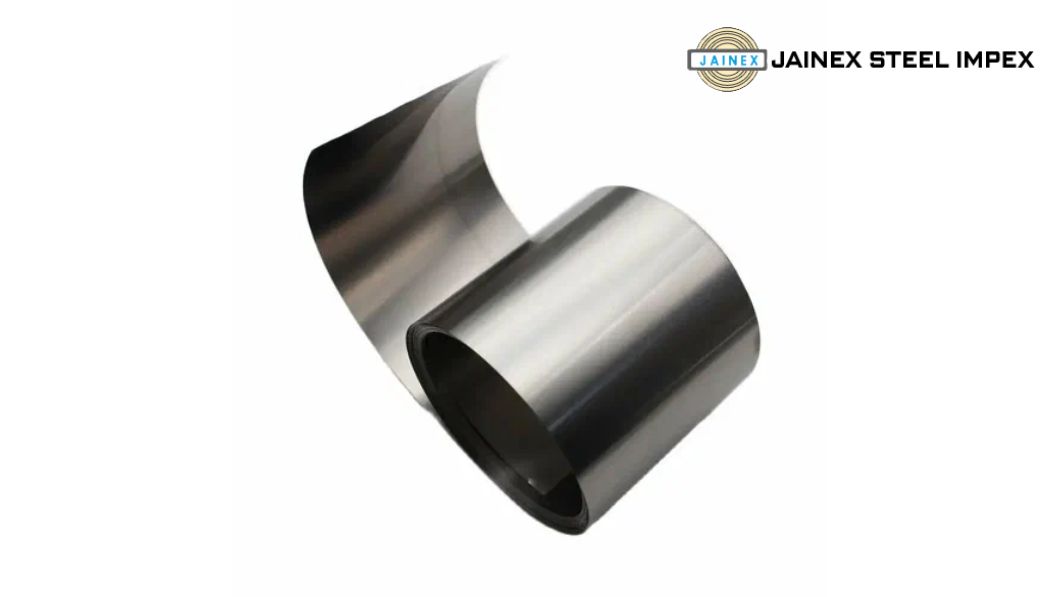
Titanium foils have become a go-to material across industries that need lightweight components without sacrificing strength or corrosion resistance, from aerospace assemblies to medical devices. Selecting the right titanium foils depends on getting several factors right at once: alloy grade, thickness, mechanical properties, corrosion resistance, and how the foil will actually be used once it’s installed. Commercial Titanium Foils come in enough grade and thickness combinations that the right choice for one project can be entirely wrong for another. This guide covers the types, properties, selection criteria, applications, and best practices worth knowing before specifying titanium foils for an industrial project.
What Are Titanium Foils?
Titanium foils are thin-gauge titanium sheet material, typically produced through rolling processes that reduce thickness while maintaining the metal’s strength and grain structure. Manufacturing generally starts with a titanium ingot that’s hot-rolled down to an intermediate gauge, then cold-rolled to reach foil thickness, often well under a millimetre. Common thickness ranges span from a few microns up to around 0.5 mm, depending on the application. Foils are available in both Commercially Pure Titanium grades and Titanium Alloys, each suited to different combinations of strength and formability. Industry standards, mainly ASTM specifications, govern composition and mechanical properties, while surface finishes and standard dimensions vary by supplier and intended use.
Types of Titanium Foils
Titanium foil is available in many grades to give the proper combination of strength, formability and chemical resistance for specific service requirements.
- Commercially Pure (CP) Foils: Non-alloyed, good intrinsic corrosion resistance and good ductility, and a consistent baseline for moderate chemical conditions.
- Grade 2 Foils: The industrial workhorse of the CP grades, providing the best combination of moderate tensile strength and good cold formability.
- Grade 5 (Ti-6Al-4V) Alloy Foils: Superior mechanical strength and toughness; workhorse material for aerospace and high-stress components.
- Speciality Alloy Foils Grades manufactured to meet unique service conditions such as high temperature capabilities and severe medical biocompatibility norms.
Temper annealed foils give the best ductility and are best for deep drawing. Cold Rolled and Annealed Cold rolled foils are less ductile but tougher and stronger under tension.
Key Properties of Titanium Foils
Titanium foils are known to provide a remarkable combination of mechanical strength, low density and environmental resistance for major industrial, medical and aerospace applications. They are able to tolerate extreme environmental conditions and strong mechanical stress without deterioration and preserve their structural integrity thanks to their specific metallurgical properties.
- High Strength-to-Weight Ratio: As strong as steel but less than half the weight, making it ideal for weight-sensitive applications.
- Good Corrrosion Resistance: A strong self-healing oxide film is formed that is resistant to hostile chemical media and seawater corrosion without additional coatings.
- Proven Biocompatibility: High purity grades have been safely tested for direct contact with human tissue and physiological fluids in surgical and implanted medical devices.
- Temperature and Fatigue Durability: It secures the structural toughness with long-term temperature exposure and also helps in preventing micro-fissuring from repeated cyclic mechanical stress.
- Ductility and Formability: It can allow for accurate stamping, deep drawing and thin-gauge forming with no cracking or unpredictable springback concerns.
- Extended Service Life: Chemical passivity and mechanical wear resistance for consistent long-term performance and fewer replacement cycles.
How to Choose the Best Titanium Foils
Foil strength, cost and corrosion resistance are determined by the material grade. Get there. Thickness and mechanical strength should be enough to resist the load of the application and to keep flexibility. You should not expect the corrosion and temperature resistance of the alloy family without considering the service environment. The capacity of the foil to weld and to shape is important in joining or in shaping. Many applications are affected by surface finish in appearance and performance. It is essential to check ASTM standards to make sure specs do not contradict each other. Select titanium foils and industrial titanium foils depending on their application-specific attributes, including biocompatibility, electrical conductivity, and fatigue performance
Applications of Titanium Foils
Titanium foils provide great strength, low weight and high chemical inertness to solve important technical problems in many industries.
- Aerospace: lighter airframe skins, acoustic engine blankets and thermal barriers without loss of structural strength.
- Chemical Processing: Protects heat exchangers, reaction vessels and internal linings against harsh acidic conditions.
- Medical Devices: Manufactures safe, biocompatible enclosures for surgical tools, pacemakers, and implanted hardware.
- Battery & Electronics: A thin, highly conductive current-collector foil for next-generation batteries and microelectronics.
- Marine Engineering: Resists strong corrosion from seawater in subsea sensors, specialised seals and undersea equipment.
- Automotive: Extreme heat resistance and mass reduction for high performance exhaust and turbocharger systems.
- Energy & Power Generation: The constant thermal cycling and corrosive steam in the cooling units of power plants are withstood by it.
- Research Laboratories: Reliable, wewell-documentedetallurgical qualities for exact testing and experimental settings.
Conclusion
Selecting the right Titanium Foils is not about choosing the first foil you see, but about matching the material grade, thickness, operating environment, and application requirements to the job at hand. Titanium Alloy Foils may be counted on for superior corrosion resistance, lightweight performance, durability and long-term reliability in a wide range of demanding industrial applications such as aerospace and medical devices. The selection criteria have to be right in the first place to save time and money in the long run. At Jainex Steel Impex, we supply titanium foils in different grades and specifications and can help customers identify a suitable option based on their dimensional, material, and application requirements.