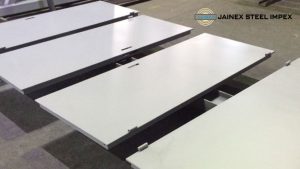
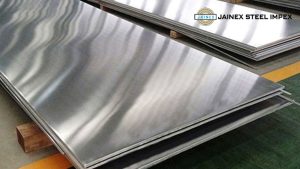
Stainless Steel 202 sheets show up across industrial, architectural, fabrication, kitchen, and general engineering work, and picking the right sheet means understanding what the alloy offers before specifying it. Composition, properties, advantages, limitations, and applications all matter skipping any of them tends to surface as a problem later. SS 202 brings a mix of strength, formability, corrosion resistance, and cost-effectiveness in suited environments, but selection always comes back to matching the alloy to actual service conditions rather than assuming it fits every application.
What Are Stainless Steel 202 Sheets?
SS 202 sits within the austenitic stainless steel family, built around chromium, nickel, manganese, and nitrogen in place of the higher nickel content in grades like 304. High Strength Stainless Steel 202 Sheets carry the ASTM A240 Type 202 designation, and the austenitic structure gives the material its non-magnetic behavior and good formability. Manganese and nitrogen substitute partly for nickel, keeping the alloy cost-effective without sacrificing austenitic properties. Sheets and plates differ mainly in thickness classification. Exact chemical and mechanical requirements should always be verified against the applicable specification before ordering.
Key Properties of Stainless Steel 202 Sheets
SS 202 is a very workable material for varied, general purpose applications, with high strength, outstanding toughness and strong corrosion resistance in mild conditions.
- The material has good formability and weldability to lend itself to fabrication into custom panels, structural trim and architectural components.
- The clean surface appearance means the metal will keep up extremely well over time for conspicuous architectural finishes
- Reasonable low temperature performance indicators couple naturally with reliable oxidation resistance in suitable conditions
- This grade is not comparable to 304 or 316 stainless steel as more highly alloyed options are needed for exposure to strong chemicals or chlorides.
Benefits of Using SS 202 Sheets
Strength-to-weight characteristics support structural and fabrication uses where excess material adds cost. Corrosion resistance suits many general environments, and the finish holds up well where appearance matters. Good forming capability makes SS 202 versatile across kitchen equipment, furniture, and trim, and a long service life is realistic when matched to its environment. Where extreme corrosion resistance isn’t required, SS 202 offers a practical, lower-cost alternative.
Common Applications of Stainless Steel 202 Sheets
Stainless steel 202 sheets have many uses in various commercial and engineering fields offering an inexpensive trade-off between strength, aesthetic appearance, and decent performance in mild conditions.
- Kitchen and food-service equipment: Due to its good formability and adequate corrosion resistance indoors, this alloy is used in the manufacturing plants for commercial kitchenware.
- Architectural uses and railings: Its superior surface finish is the reason this material is selected by today’s builders for decorative trim, interior panelling and architectural railings.
- Furniture and automobile components: The material’s high strength-to-weight profile benefits designers of consumer products, particularly in structural shaping.
- Industrial and fabrication applications: These sheets are used in general fabrication operations for daily equipment components where the corrosion needs are generally modest.
- Commercial and general engineering work: This grade is used in engineering projects for structural purposes where high-nickel alternatives are not required.
Factors to Consider When Choosing Stainless Steel 202 Sheets
Application Environment SS 202 can be affected in longevity by exposure to indoor or outdoor environments, humidity, chemical or salt/chloride contact and temperature.
Required Strength: Structural loads, impact, bending, vibration and wear conditions dictate the suitability of the strength profile.
Sheet Thickness: Depends on load, fabrication needs, dimensional stability, and design specification.
Sheet specifications: Length, width, thickness tolerance, flatness and custom specifications to be confirmed with the fabrication plan.
Surface Finish: Determined by appearance, cleaning requirements, production method and application.
Fabrication Requirements: Cutting, bending, forming, welding, drilling, and polishing should be considered before finalizing material selection.
Standards and Certification: ASTM A240 Type 202 Sheets should be checked for the applicable chemical composition, mechanical properties, dimensions, tolerances, heat number, Material Test Certificate, and traceability requirements.
Surface Finishes Available for SS 202 Sheets
2B finish offers a smooth, matte surface common in general fabrication, while BA finish provides a brighter, more reflective look. No. 4 and brushed finish suit architectural and appliance applications where a uniform directional grain matters, and polished finish steps up further for decorative use. Additional decorative finishes are available depending on the supplier. Finish choice affects appearance, cleaning ease, and how well the sheet performs in architectural and industrial settings.
Fabrication and Maintenance of Stainless Steel 202 Sheets
SS 202 can be cut, sheared, bent and formed using the usual stainless steel fabrication practices. Welding, grinding and polishing should be done carefully to prevent contamination by carbon steel equipment that produce surface staining. Subsequent washing after production removes residue that could affect corrosion resistance. Regular cleaning to remove surface dirt helps preserve the finish. Regular inspection in corrosive environments, protecting against surface damage and avoiding aggressive cleaning chemicals all contribute to extending service life.
Conclusion
Stainless Steel 202 sheets offer a practical mix of strength, formability, and corrosion resistance for many general industrial, architectural, and fabrication applications. Selecting the correct sheet means evaluating the operating environment, strength requirements, thickness, dimensions, finish, fabrication method, and applicable standards together. When service conditions match what SS 202 offers, it remains a cost-effective and reliable choice.