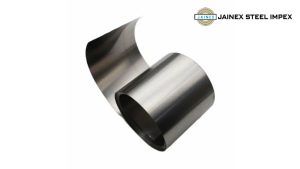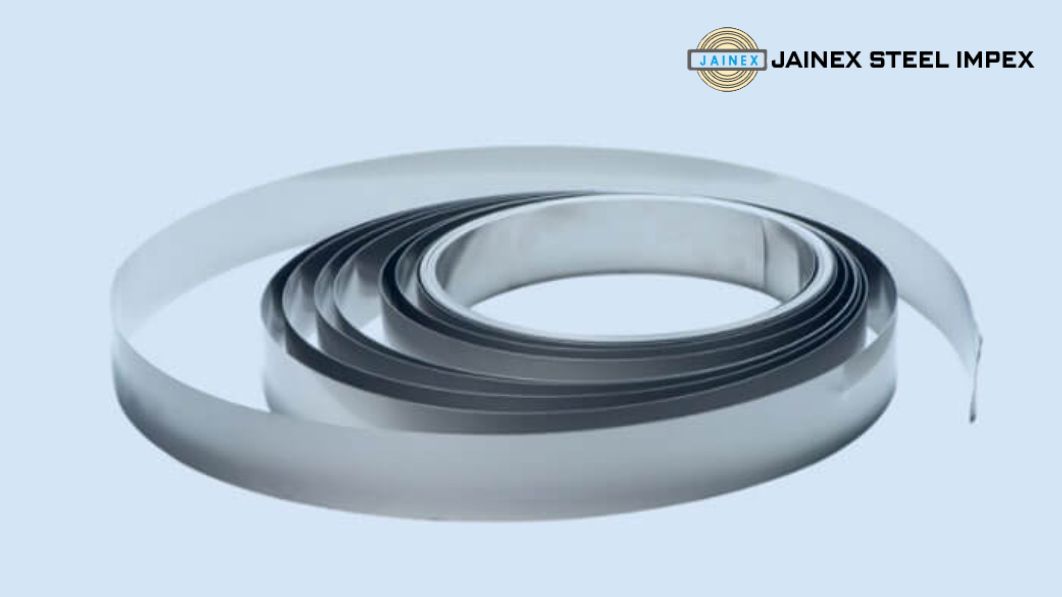
Monel strips deliver exceptional corrosion resistance in harsh marine engineering applications where ordinary metals degrade rapidly from constant seawater exposure. Engineers need something that will take years of chloride attack without constant repair. Due to its corrosion resistance, mechanical strength and extended service life, monel metal strips find wide applications in shipbuilding, offshore platforms, and coastal infrastructure. This blog deals with the features, applications, benefits, and selection criteria for Monel Strip in marine engineering.
What Are Monel Strips?
Monel Strips are a nickel-copper alloy product, typically containing around 63-70% nickel and 28-34% copper, along with small amounts of iron and manganese. That composition gives the alloy its defining characteristic is resistance to seawater and chloride environments that would corrode standard stainless steel within a fraction of the time.
Monel 400 remains the most widely used grade for marine work, valued for its balance of strength and corrosion resistance. Strips are supplied in a range of thicknesses and widths, with finishes running from mill to polished depending on the application. Most production follows ASTM B127 and related international standards, giving buyers a consistent reference point for quality and composition across suppliers.
Key Properties of Monel Strips
Monel strips are suitable for maritime and industrial applications due to their strength and corrosion resistance. Corrosion of many ordinary carbon steels and common stainless steel grades may be rapid on exposure to sea water over long periods.
- Corrosion Resistance: Excellent in saltwater and maritime settings. Better than most stainless steel grades.
- Great mechanical strength: It is able to withstand considerable structural and load-bearing strains without adding bulk.
- Resistance to pitting and crevice corrosion: Avoids alloy failure in low-flow zones from stagnant fluids.
- Good Weldability & Easy Fabrication: Cuts, forms and welds neatly to match shipyard and production timeframes and shop procedures.
- Excellent Heat Resistance: It keeps structural properties during wide temperature changes in heat exchangers and marine equipment.
- Rugged In Harsh Environments: No failure under mechanical impact, vibration and environmental stress.
- Long service life: It helps reduce the frequency of parts to be changed and reduces the cost of maintenance of equipment.
Applications of Monel Strips in Marine Engineering
Monel Alloy Strips are very important in maritime engineering applications where the usual metal components are exposed to extreme saltwater situations that quickly wear them out. Their bodies are of a special nickel-copper nature, which makes them very resistant to the worst stresses of marine life.
Shipbuilding Fittings: Used to protect structural components, brackets and hull cladding that are constantly exposed to salt spray.
Offshore Fasteners: Protect important platform hardware, tie-rods and mounting systems against air corrosion.
Seawater Piping Lines: Prevents pinhole leaks and degradation of internal walls in high velocity marine piping systems.
Desalination Systems: Protects high-pressure desalination systems, evaporators and fluid control valves against pitting.
Propulsion Assemblies: Incorporated into the propeller shafts and the marine drive parts which are under constant mechanical torque.
Thermal Condensers: Reliable heat transmission and corrosion resistance in seawater-cooled heat exchangers.
Pump & Valve Internals: For smooth running in marine pumps, strainers and heavy-duty control valves.
Benefits of Using Monel Strips in Marine Engineering
Monel strips used in marine environments provide long-term reliability and significant cost savings during the life of a component.
- The excellent resistance to seawater corrosion greatly reduces the regular maintenance downtime and frequency of repairs.
- The increased mechanical strength under stress reduces the unexpected mechanical failure of vital offshore equipment.
- Longer component life equals lower total life cycle costs and longer replacement cycles.
- Improved material reliability enhances operational safety for demanding offshore and desalination applications.
Factors to Consider When Choosing Monel Strips
Choosing Monel strips implies you have to match material qualities to your special operational and structural needs.
- Select the right grade of monel depending upon the exposure to seawater or pollutants.
- Match strip thickness and size with anticipated mechanical load requirements. Evaluate exposure conditions such as continuous immersion and marine splash zones.
- Before manufacturing, verify that the material is weldable and formable.
- Buy only from known sources and insist on complete ASTM quality certifications.
Conclusion
Monel Strips are the preferred material in maritime engineering due to its outstanding corrosion resistance, mechanical strength and long term durability that no other material can match in seawater applications. The performance robustness has resulted in an increase of applications such as shipbuilding, offshore platforms and desalination facilities. The difference between equipment that lasts for decades and equipment that needs to be replaced early is in the selection of the right grade and purchase of certified material. Jainex Steel Impex is a trusted source of this difficult material for engineers, supplying high-quality Monel Strips for maritime and industrial applications.