A stainless steel strip shows up in places most people never notice. Springs inside a switch, shims behind a bearing, the thin band on a hose clamp. Engineers and procurement teams working with stamped parts run into this material constantly, and knowing what separates a strip from a sheet changes how a purchase order gets written. This article covers what the product is, how mills produce it, the grades available, and where it fits into industrial supply chains. Jainex Steel Impex supplies stainless steel strip in coil form for stamping and precision fabrication, and the stainless steel strip range covers multiple grades and tempers.
What is Stainless Steel Strip?
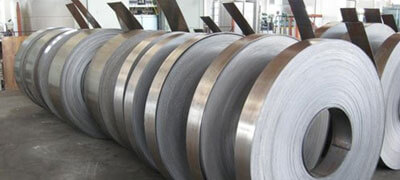
A stainless steel strip is a narrow, flat-rolled stainless product, generally under 600 mm wide, supplied in coil form rather than as cut sheets. Thickness runs from around 0.05 mm up to 3.2 mm depending on grade and mill. A strip gets slit from a wider master coil to an exact width, then processed further through annealing, skin passing, or edge conditioning. Stamping plants use it because tight thickness and flatness tolerances hold up through high-speed dies, and unlike sheet, strips run continuously through feeding equipment.
How Stainless Steel Strips Are Manufactured?
Manufacturing starts with a hot-rolled or cold-rolled master coil, slit down to width on a slitting line. The strip goes through annealing to relieve internal stress, followed by pickling or bright annealing. Some grades get a skin pass, a light final rolling pass that sets the finish and locks in temper. Edge conditioning follows, and coil weight, width tolerance, and camber all get checked before shipping.
Key Properties of Stainless Steel Strips
Strip grades share a handful of properties that make them useful across stamping work.
Corrosion Resistance
Chromium content forms a passive oxide layer that resists rust in most industrial environments. Grades like 304 and 316 handle different exposure levels, with 316 holding up better against chloride.
High Strength
Cold-worked strip reaches higher tensile strength than the same grade annealed, sometimes doubling yield strength through temper rolling. This lets designers use thinner gauges without losing load capacity.
Heat Resistance
Austenitic grades keep useful strength at elevated temperatures, with some rated above 800°C in oxidizing atmospheres. Grade needs to match the actual operating temperature.
Formability & Weldability
Annealed strip bends and deep draws without cracking, which is why stamping shops specify it for washers and clips. A spring hard strip won’t take the same bend radius as a soft coil.
Types of Stainless Steel Strips
A strip gets classified by rolling process and finish, and each type suits a different stage of fabrication.
Cold Rolled Stainless Steel Strip
Cold rolling passes a strip through rolls at room temperature, producing a smoother finish and tighter tolerance than hot rolling. Thickness typically stays under 3 mm.
Hot Rolled Stainless Steel Strip
Hot rolling happens above the recrystallization temperature, producing a thicker strip with a rougher surface. This suits jobs where cost matters more than finish.
Precision Stainless Steel Strip
This category holds thickness tolerances as tight as ±0.005 mm with controlled flatness, built for high-speed stamping and electronics contacts.
Hardened & Tempered Stainless Steel Strip
This strip goes through controlled cold working to reach a set hardness, from quarter-hard through spring temper. Spring temper strip exceeds 1700 MPa in some grades.
Advantages of Using Stainless Steel Strips
Strip offers practical advantages over other flat-rolled formats for specific manufacturing needs.
Superior Corrosion and Oxidation Resistance
The oxide layer protects against rust and chemical exposure in humid conditions without additional coating.
High Tensile Strength and Mechanical Durability
Cold working raises tensile strength well beyond the annealed baseline, letting thinner strip carry structural loads.
Exceptional Dimensional Tolerance and Precision
Precision slitting holds thickness and width within tight bands, cutting scrap on high-volume runs.
Excellent Formability, Deep Drawing, and Weldability
Lower temper strip draws into complex shapes, and most grades weld using conventional methods.
Superior Hygiene, Cleanability, and Non-Porous Surface
The smooth surface resists bacterial buildup, which is why strip shows up in food and medical parts.
Sustainability and High Recyclability
Scrap gets recycled back into new coil without losing material properties, cutting the lifecycle impact.
Aesthetic Versatility and Surface Finishes
Finish options run from dull 2B to bright annealed to polished, covering hidden and visible parts.
Long-Term Cost-Effectiveness (Life-Cycle Value)
A higher upfront cost gets offset by lower maintenance, so cost over service life often favors the strip.
Stainless Steel Strip vs Stainless Steel Sheet
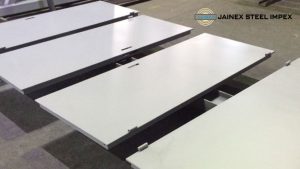
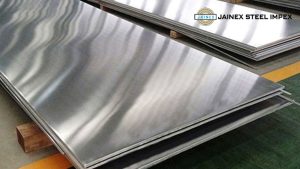
Strips and sheets share the same family of flat rolled stainless products, but width, tolerance, and use separate the two clearly.
| Aspect | Stainless Steel Strip | Stainless Steel Sheet |
| Definition & Width | Narrow, precision slit, commonly under 600 mm, supplied in coil form | Wider flat products, typically 600 mm or above, sheets or wide coils |
| Thickness Range | Roughly 0.05 to 3.2 mm, tight tolerance | Roughly 0.15 to 6.35 mm, broader range |
| Form & Supply | Coiled strip, slit to exact width, continuous feeding | Flat cut sheets or wide coils, cut to size |
| Tolerances | Tighter on thickness, width, flatness, edge | Standard sheet tolerances, general fabrication |
| Surface Finish | 2B, BA, polished, temper rolled | 2B, No. 4, No. 8, BA |
| Temper / Strength | Precise, annealed through spring temper | Typically annealed or standard mill temper |
| Edge Condition | Slit, rounded, deburred | Sheared or mill edge |
| Applications | Washers, springs, contacts, small stamped parts | Tanks, vessels, ducts, panels, structural parts |
| Processing | Progressive stamping, deep drawing | Cut, bent, or welded into assemblies |
| Formability | Higher per unit thickness, tight bend radii | Good but stiffer at comparable thickness |
| Cost | Higher per kg, justified by reduced scrap | Lower processing cost, economical for panels |
| Standards | ASTM A240/A666, negotiated tolerances | ASTM A240/A480, standard tables |
Factors to Consider When Choosing Stainless Steel Strip
Grade selection depends on the corrosion environment, so a part exposed to chlorides needs 316, while indoor use often works with 304. Thickness and temper need to match the forming operation. Width tolerance and edge condition matter for feeding equipment, particularly on high-speed presses where an oversized coil jams the die. Surface finish should match the end use, and coil weight and inside diameter need to fit what the feeding line can handle.
How to Maintain Stainless Steel Strips for Long Service Life
Storage conditions affect the strip more than most buyers expect, since damp storage or contact with carbon steel leads to staining before the part gets used. Coils should sit in dry storage away from chloride exposure and mild steel contact. Cleaning with mild detergent removes contamination without damaging the passive layer, and abrasive pads should be avoided. Passivation restores the oxide layer after machining or welding disturbs it.
Conclusion
A stainless steel strip covers a specific niche within flat-rolled stainless products, built for stamping and precision fabrication where sheet doesn’t hold the tolerances required. Grade, temper, and finish all need to match the application before ordering, and getting this wrong shows up as cracked parts on the floor. Jainex Steel Impex stocks stainless steel strip across multiple grades and tempers. Contact Jainex Steel Impex for coil specifications and stock availability.
FAQs
What is the difference between a stainless steel strip and a sheet?
The strip is narrower, under 600 mm wide, and supplied in coil form for continuous feeding. A sheet is wider and cut flat for panels and larger parts.
Are stainless steel strips available in custom sizes?
Custom widths and thicknesses get produced through slitting and rolling to match die requirements. Minimum order quantities usually apply.
Can stainless steel strips be welded and formed easily?
Most austenitic grades weld using standard TIG or resistance methods without preheating. An annealed strip bends more easily than a spring-hard coil.
What finishes are available for stainless steel strips?
Common finishes include 2B, bright-annealed, and polished, chosen based on whether the part is visible or hidden.
How do I select the right stainless steel strip grade?
Grade depends on the corrosion environment, with 304 for general indoor use and 316 for chloride or marine exposure.